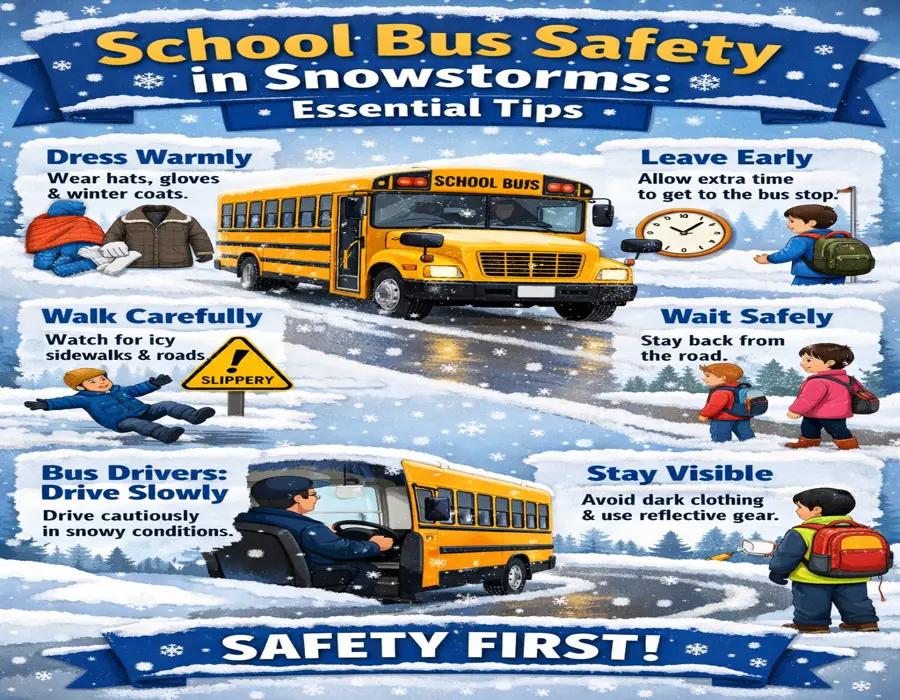
School Bus Safety in Snowstorms: Essential Tips
Winter storms create some of the most challenging driving conditions for school transportation systems. Snow covered roads, freezing temperatures, and poor visibility increase the risk of accidents and delays. Because thousands of students rely on buses every day, maintaining strong school bus safety in snowstorms is a priority for school districts, drivers, and parents.
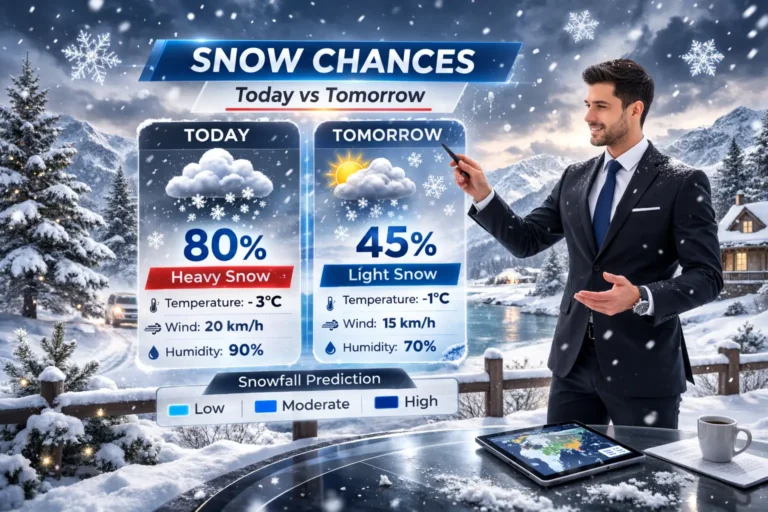
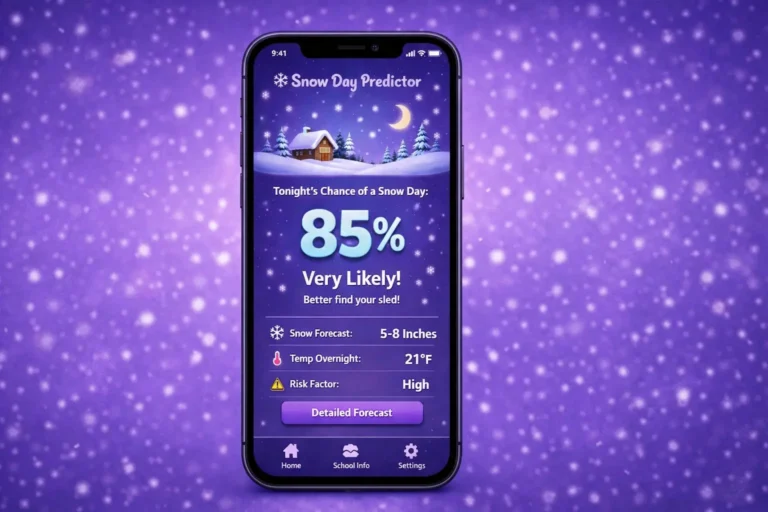
If you want to Check Snow chances visit snow day predictor
A school bus is generally one of the safest forms of student transportation. However, when heavy snowfall or icy roads appear, extra preparation and awareness become essential. Proper planning, vehicle maintenance, and responsible driving behavior help ensure that children travel safely even during severe winter weather.
Why School Bus Safety in Snowstorms Matters
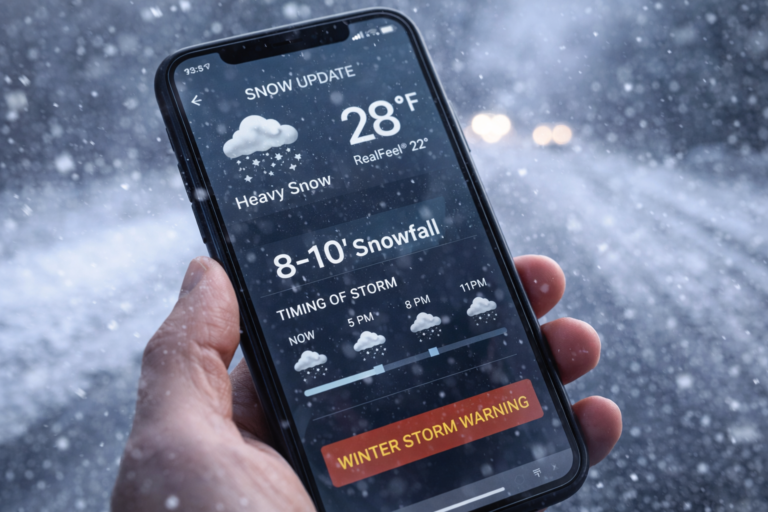
When snowstorms occur, driving conditions change rapidly. Snow accumulation can obscure road markings, while freezing rain can create slippery surfaces that increase stopping distance. Visibility also becomes limited when snow, fog, or blowing wind reduces a driver’s ability to see the road ahead.
School buses are large vehicles that take longer to slow down or stop than smaller cars. Because of their size and weight, drivers must adjust their speed and maintain a greater distance from other vehicles during winter weather. Studies and transportation safety guidelines emphasize that buses should leave more space between vehicles and reduce speed on icy roads to maintain control.
Strong winter safety practices help prevent accidents, protect students, and ensure that transportation services remain reliable throughout the school year.
Common Winter Hazards for School Buses
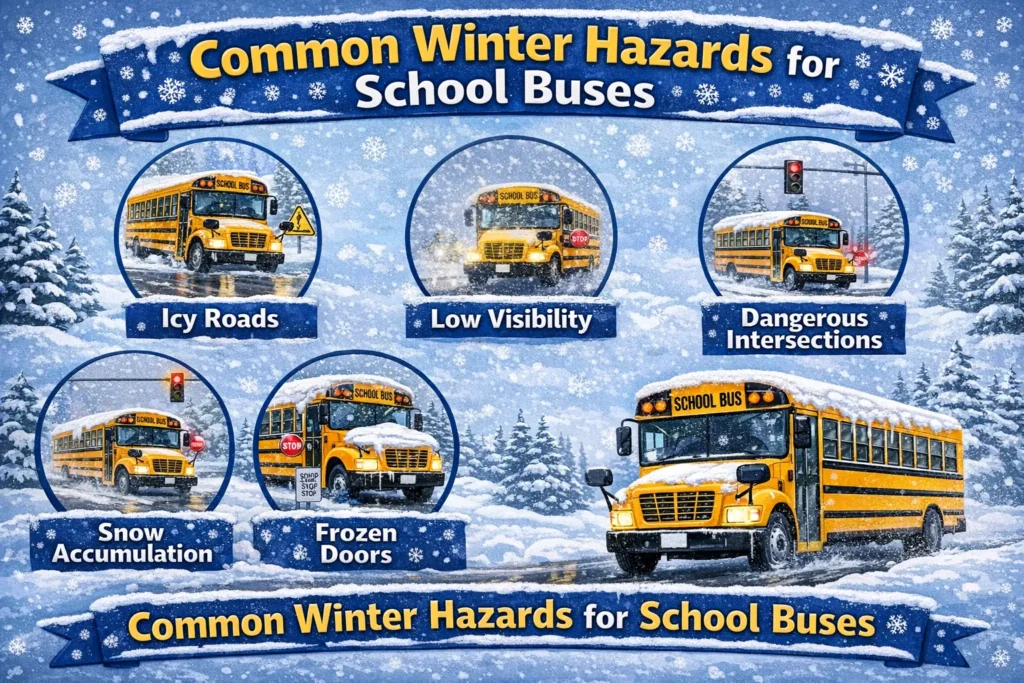
Snowstorms create several hazards that drivers must manage carefully. One of the most common risks is reduced traction caused by snow and ice. When roads become slippery, braking distances increase, and vehicles may skid if drivers accelerate or turn too quickly.
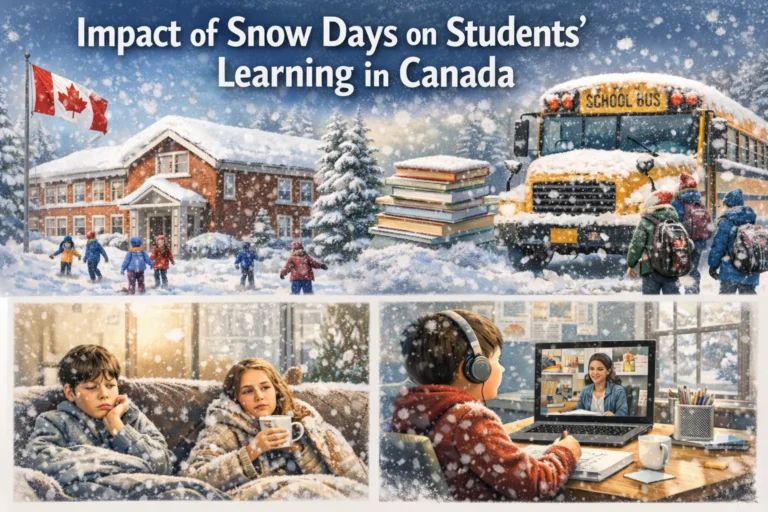
Here you can predict snow chances in ontario canada
Visibility can also become a serious problem. Heavy snowfall, fog, and glare from reflective snow surfaces make it harder to see pedestrians, traffic signals, or other vehicles. In addition, snowbanks formed by plowing can block sightlines near intersections and bus stops.
Strong winds during winter storms may push a bus against the side, especially on open roads or bridges. These conditions require drivers to remain alert and adjust their speed when necessary.
Preparing School Buses for Winter Conditions
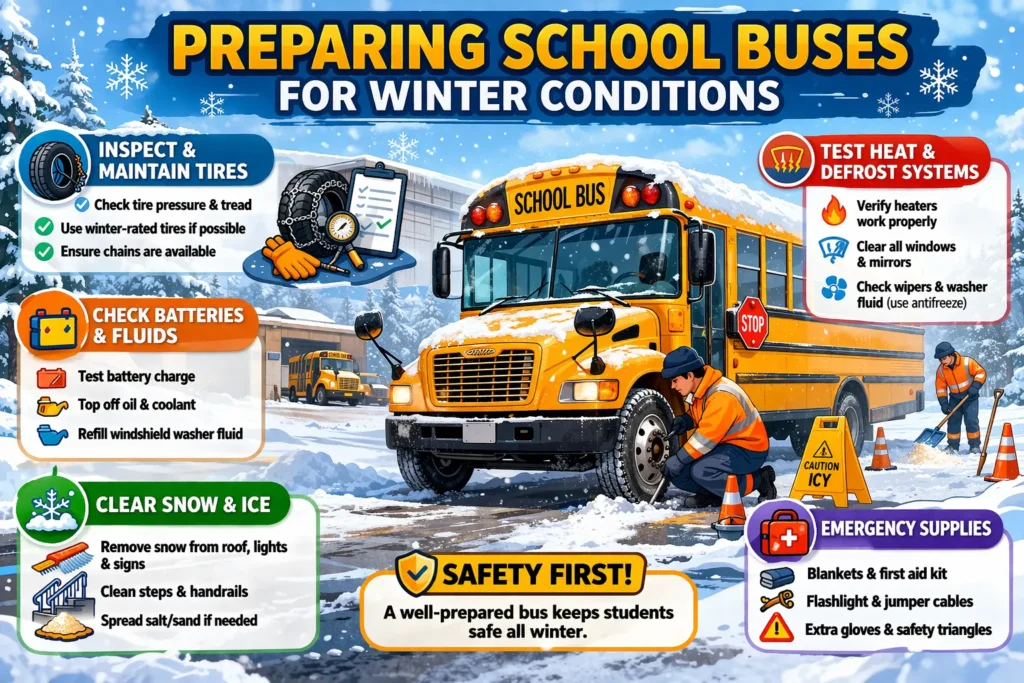
Preparation plays a critical role in improving school bus safety in snowstorms. Before winter begins, transportation departments usually inspect vehicles to ensure they are ready for extreme weather.
A typical winter preparation process includes checking tire traction, testing windshield wipers, verifying that heating systems and defrosters function properly, and confirming that exterior lights are fully operational. Clearing snow and ice from windows, mirrors, and lights is also necessary to ensure drivers maintain clear visibility during routes.
Many buses carry emergency supplies, such as blankets, flashlights, first-aid kits, and communication devices, in case a vehicle becomes stranded during severe weather. These precautions help protect students in the event of unexpected delays.
Want to read more about snow and fun fact explore now
Safe Driving Techniques During Snowstorms
Drivers play the most important role in maintaining school bus safety in snowstorms. When winter weather arrives, transportation experts recommend adjusting driving behavior to match road conditions.
One important strategy is maintaining additional space between vehicles. Extra distance allows drivers more time to respond to sudden stops or icy patches on the road. Speed management is equally important because driving too fast on slippery roads can easily lead to loss of control.
Smooth acceleration and gentle braking also help prevent skidding. Sudden movements can cause a bus to slide on snow or ice, especially when turning at intersections or stopping near bus stops.
Drivers must remain alert for hidden dangers, such as black ice, which often forms on bridges, in shaded areas, and on early-morning roads where temperatures remain below freezing.
Student Safety at Bus Stops
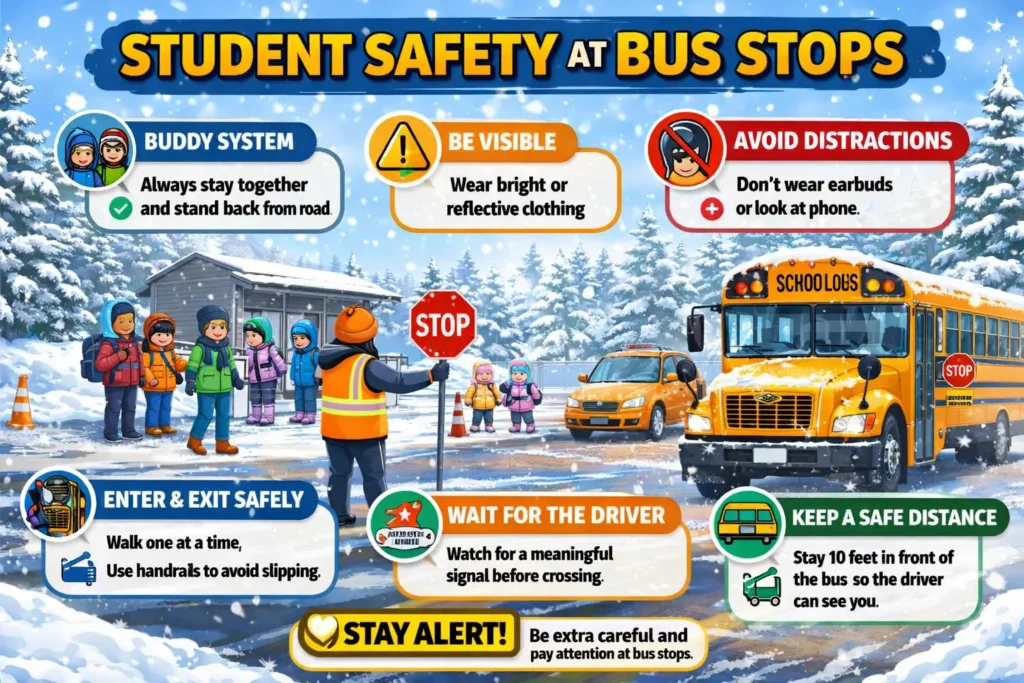
While driving safety is important, many student injuries occur during loading and unloading at bus stops. Snow and ice can make sidewalks and road edges slippery, increasing the risk of falls.
Students should stand a safe distance away from the road while waiting for the bus and avoid playing on icy surfaces. Wearing bright clothing during winter mornings also helps drivers see students more clearly when visibility is poor.
Drivers must carefully watch students as they board or exit the bus and ensure that every child is accounted for before leaving the stop. Safety experts emphasize that drivers should never move the bus until all students are in a safe location and visible.
Responsibilities of Parents and Schools
Maintaining strong school bus safety in snowstorms requires cooperation between families, schools, and transportation departments. Parents can help by ensuring children dress warmly and arrive at bus stops early so they do not rush across slippery streets.
Schools also play a role by monitoring weather forecasts and communicating transportation updates to families. In severe conditions, school districts may delay routes or cancel transportation services entirely to avoid unnecessary risks.
Clear communication helps families plan ahead and reduces confusion when winter storms disrupt regular schedules.
Emergency Preparedness During Severe Weather
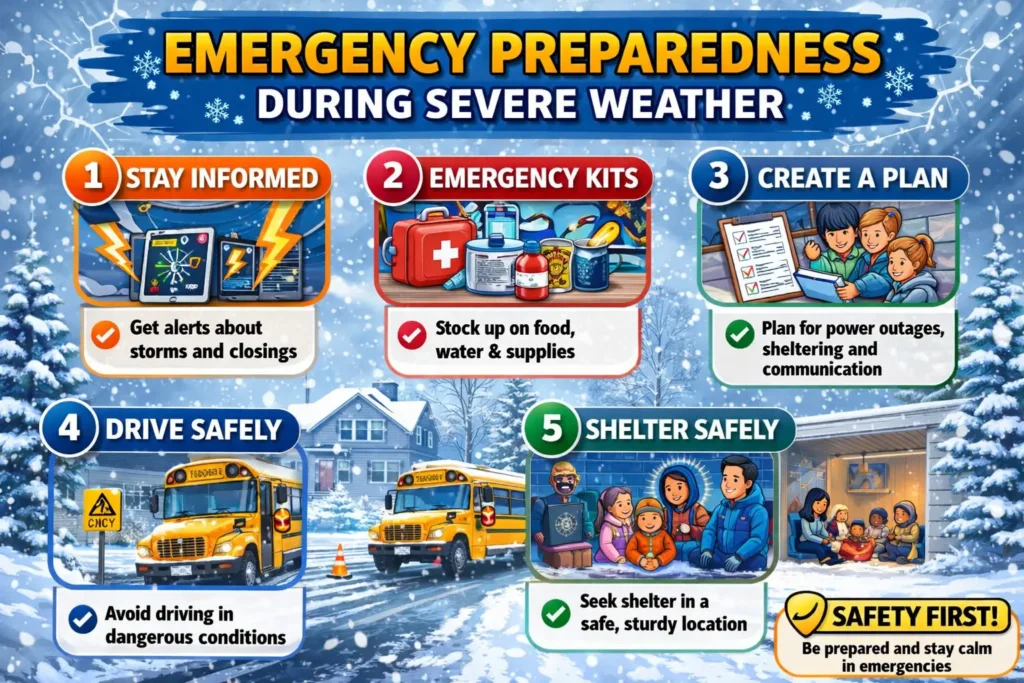
Despite careful planning, winter storms can still create unexpected situations. If a bus becomes stuck due to snow or icy conditions, safety guidelines generally recommend that students remain inside the bus until help arrives.
A bus provides better protection from wind and cold than standing outside during a storm. Drivers should contact transportation officials immediately and follow emergency procedures while keeping students calm and warm.
Prepared drivers and well-equipped vehicles make it easier to manage these situations safely.
Conclusion
Snowstorms are a regular part of winter in many regions, and they can create serious challenges for school transportation. By focusing on preparation, safe driving practices, and clear communication, school districts can maintain strong school bus safety in snowstorms even when weather conditions become difficult.
Regular vehicle inspections, careful route planning, and responsible behavior from both drivers and students help ensure that children travel safely to and from school throughout the winter season.
How can school buses stay safe during heavy snowstorms?
School buses stay safe during snowstorms through proper vehicle inspections, reduced driving speed, increased braking distance, and careful route planning to avoid dangerous roads.
What should students do at bus stops during snowy weather?
Students should stand back from the road, wear bright winter clothing, avoid icy surfaces, and wait until the bus has fully stopped before approaching.
Do school buses operate during severe winter storms?
School districts evaluate road conditions and weather forecasts before making transportation decisions. If conditions are unsafe, buses may run on delayed schedules, or routes may be cancelled.
Why are school buses considered safe in winter weather?
School buses are built to meet strict safety standards, feature large visibility areas, and are operated by trained drivers who follow strict winter driving guidelines.
Can snowstorms cause school transportation delays?
Yes, heavy snowfall, icy roads, and reduced visibility often slow down bus routes or cause transportation delays during winter storms.