Essential Winter Health Tips for Kids to Stay Safe and Warm
Winter brings unique challenges for children, especially when temperatures drop and outdoor conditions become harsh. Parents often focus on keeping their kids warm, but maintaining overall health during colder months requires a broader approach. Following the winter health tips for kids can help protect them from cold-related illnesses, skin issues, and seasonal infections while keeping them active and comfortable throughout the season.
This article is for general information only and isn’t medical advice. If your child has a health condition, check with your pediatrician.
- Kids lose body heat faster than adults — dress babies and young children in one more layer than you wear.
- Keep children inside when the temperature or wind chill drops below −27°C; limit outdoor time below −15°C.
- Mittens beat gloves, no bulky coats in car seats, and helmets for sledding and skating.
- Sunscreen and sunglasses matter in winter — snow reflects up to 85% of UV rays.
- Annual flu shot for all children 6 months and older, ideally before the end of October.
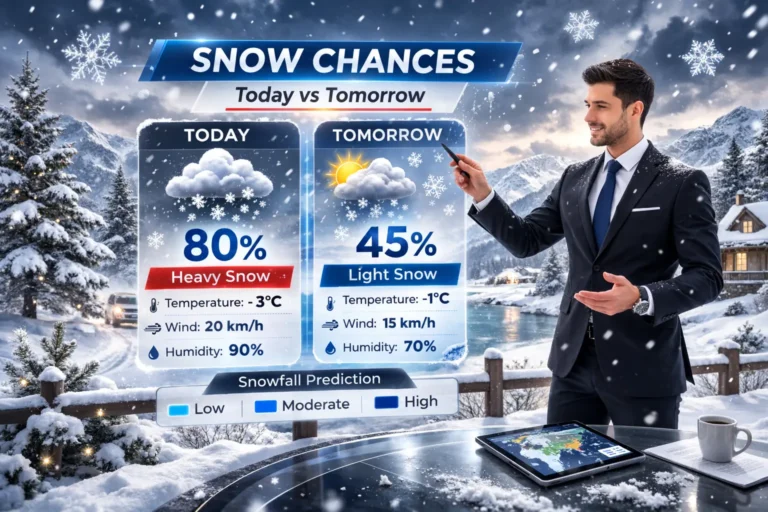
Parents often check a snow day predictor during winter to understand whether weather conditions may disrupt school schedules.
Why Winter Health Care Is Important for Children
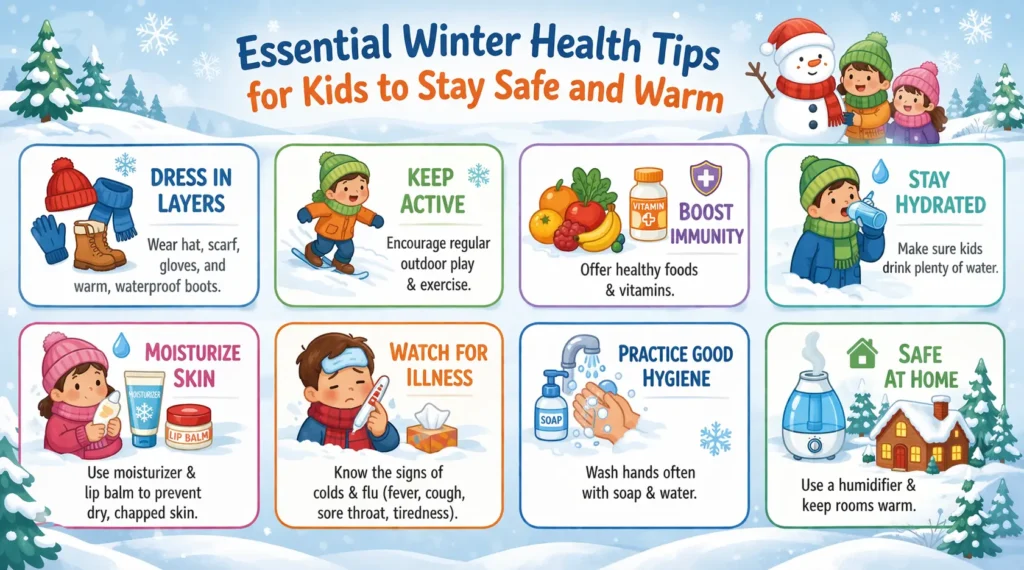
Children are more vulnerable to cold weather because their bodies lose heat faster than adults do, increasing the risk of discomfort and illness during winter months. Exposure to low temperatures without proper protection can lead to conditions such as frostbite or hypothermia, particularly when combined with wind chill and moisture. Beyond physical safety, winter also affects immunity, as indoor environments and reduced sunlight may contribute to seasonal illnesses. For this reason, a practical approach to cold-weather care matters for both physical well-being and a stable daily routine.
In regions like Canada, especially during heavy snowfall, tools such as the Ontario snow day predictor help families prepare in advance.
How to Dress Kids Properly in Cold Weather
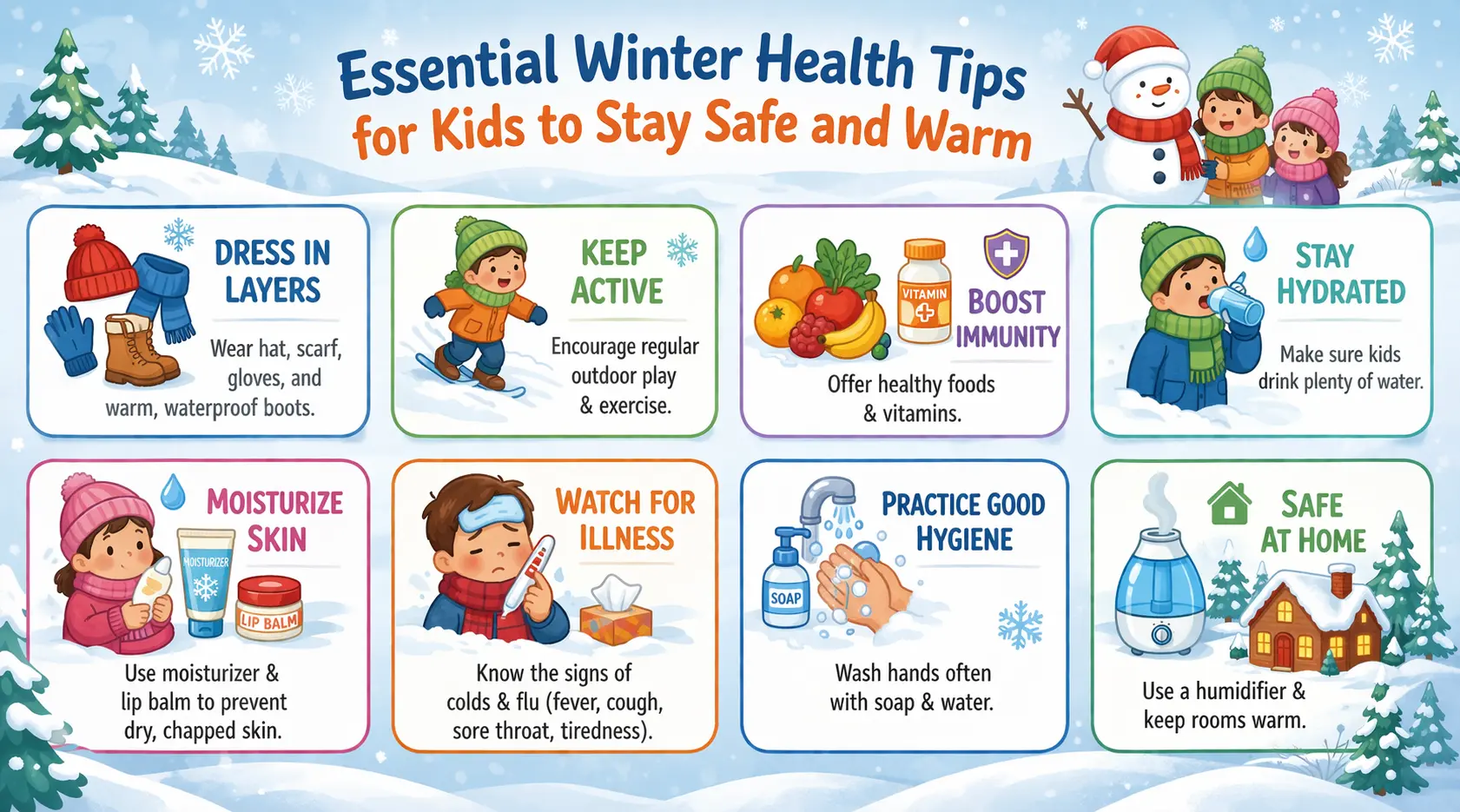
Proper clothing plays a fundamental role in protecting children from the cold, and layering remains one of the most effective strategies. A well-structured approach includes a moisture-wicking base layer, an insulating middle layer, and a protective outer layer that shields against wind and snow. Accessories such as gloves, hats, and insulated boots are equally important because significant body heat is lost through the head and extremities. It is also important to avoid overdressing, as excessive warmth can cause sweating, which later cools and increases the risk of chills. Keeping children dry and comfortably warm is one of the most practical winter health tips for kids that parents can implement daily.
How to Keep Kids Warm in the Snow
This is the question parents ask most — and the answer is a system, not a single garment. Both the AAP and the CDC recommend three layers:
- Base layer: moisture-wicking fabric — wool, silk, or polypropylene. Never cotton: it holds sweat against the skin and cools it.
- Middle layer: insulation — fleece, wool, or down to trap warm air.
- Outer layer: windproof and waterproof — a proper winter coat and snow pants.
Then protect the extremities, where kids lose heat fastest:
- Mittens, not gloves — fingers share warmth inside a mitten.
- A warm hat plus a neck gaiter or scarf.
- Waterproof insulated boots with warm socks — and pack a spare dry pair.
Two rules matter as much as the clothing: keep everything dry — change wet mittens and socks immediately, since wet fabric steals heat — and don’t overdress. Sweating leads to chilling, so peel a layer if your child is flushed and damp.
How Cold Is Too Cold for Kids?
Canadian pediatric guidance gives clear numbers. AboutKidsHealth (SickKids) advises: keep children inside when the temperature or wind chill falls below −27°C, and limit time outside below −15°C — at −15°C, exposed skin can freeze in under 30 minutes. Many Canadian schools move recess indoors at −27°C wind chill.
No thermometer handy? Use the shivering rule: shivering means come inside now. Send older kids out with a buddy, and check in regularly.
Babies are a special case. Infants lose heat even faster than older children, and their hypothermia signs look different: bright red, cold skin and very low energy, rather than shivering. The CDC warns that infants under one year should never sleep in a cold room.
Protecting Kids from Cold-Related Illnesses
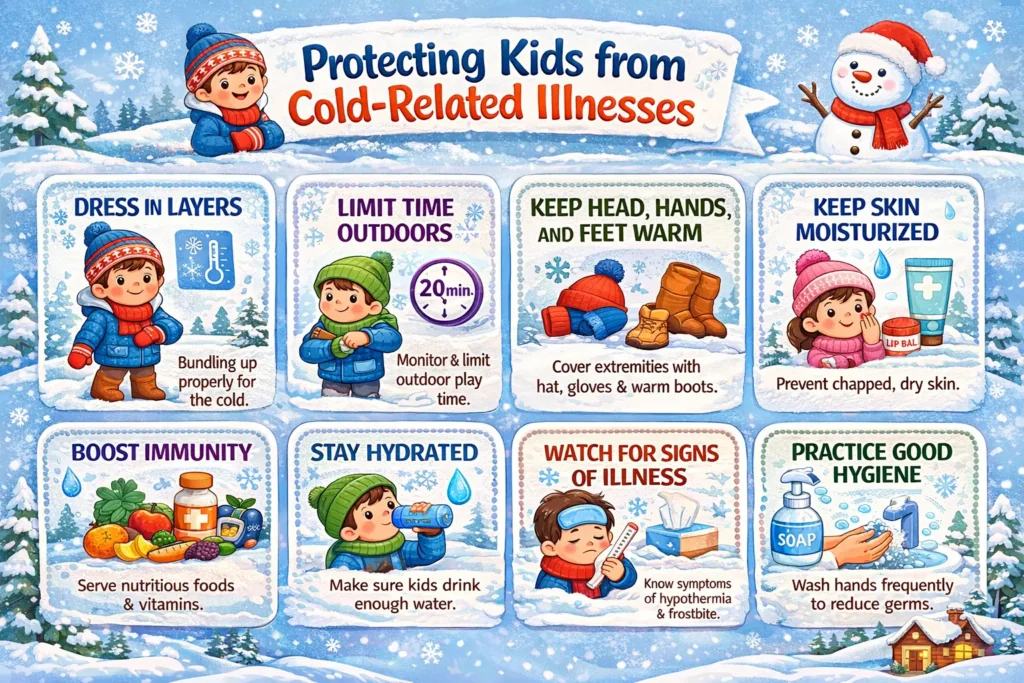
Cold weather can lead to serious health risks if early warning signs are ignored, which is why awareness and prevention are critical. Frostbite typically affects exposed areas such as fingers, toes, ears, and the nose, causing numbness or pale skin, while hypothermia occurs when body temperature drops to unsafe levels, leading to fatigue and confusion. Children should be brought indoors promptly when temperatures become extreme, especially during strong winds or prolonged exposure. Monitoring weather conditions and limiting outdoor time during severe cold are essential precautions that help prevent these risks.
During extreme cold conditions, schools may close based on safety guidelines explained in how schools decide snow days.
Winter Skin Care and Hydration Tips
Cold air combined with indoor heating often leads to dry skin, cracked lips, and irritation, underscoring the importance of skincare in winter health routines. Applying a gentle moisturizer regularly helps maintain skin hydration, while lip balm prevents dryness and discomfort. Despite the cold weather, hydration remains equally important, as children may not feel as thirsty but still require adequate fluid intake. Using sunscreen during outdoor activities is also recommended, as sunlight reflected off snow can affect sensitive skin. Hydration and skin care are commonly overlooked, but they matter as much as a warm coat.
Safe Outdoor Play During Winter
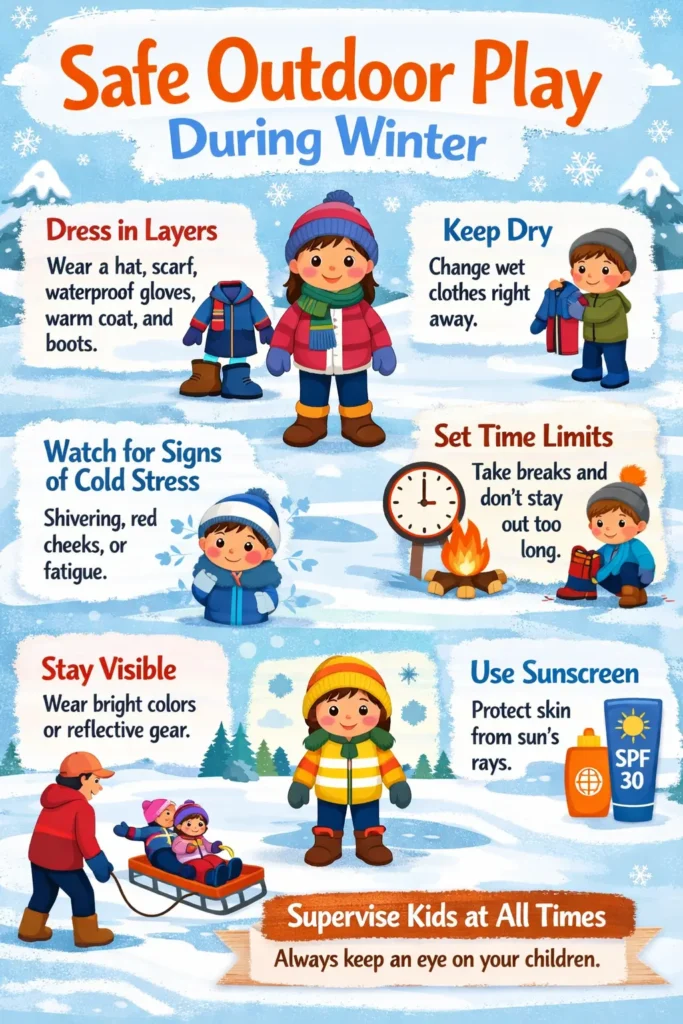
Outdoor play remains beneficial during winter, as it supports physical activity, mental well-being, and overall development, but it must be managed carefully. Children should play in safe, supervised areas away from roads, snowbanks, or frozen water surfaces that may not be stable. Parents should ensure that children take regular breaks to warm up and change out of wet clothing if necessary. While fresh air is important, balancing outdoor time with safety precautions lets children enjoy the season without unnecessary risk.
Parents should also consider road safety by reviewing how much snow makes driving dangerous before allowing outdoor travel.
Winter Safety Tips for Common Activities
Winter activities such as sledding, skating, and playing in the snow can be enjoyable but require proper safety measures to prevent injuries. Wearing helmets during activities like sledding or skating can reduce the risk of head injuries, while choosing safe locations away from traffic or obstacles is equally important. Children should also avoid playing on frozen lakes or ponds unless the ice has been officially confirmed as safe. Encouraging safe habits during recreational activities ensures that fun does not come at the cost of safety.
Daily Habits to Keep Kids Healthy in Winter
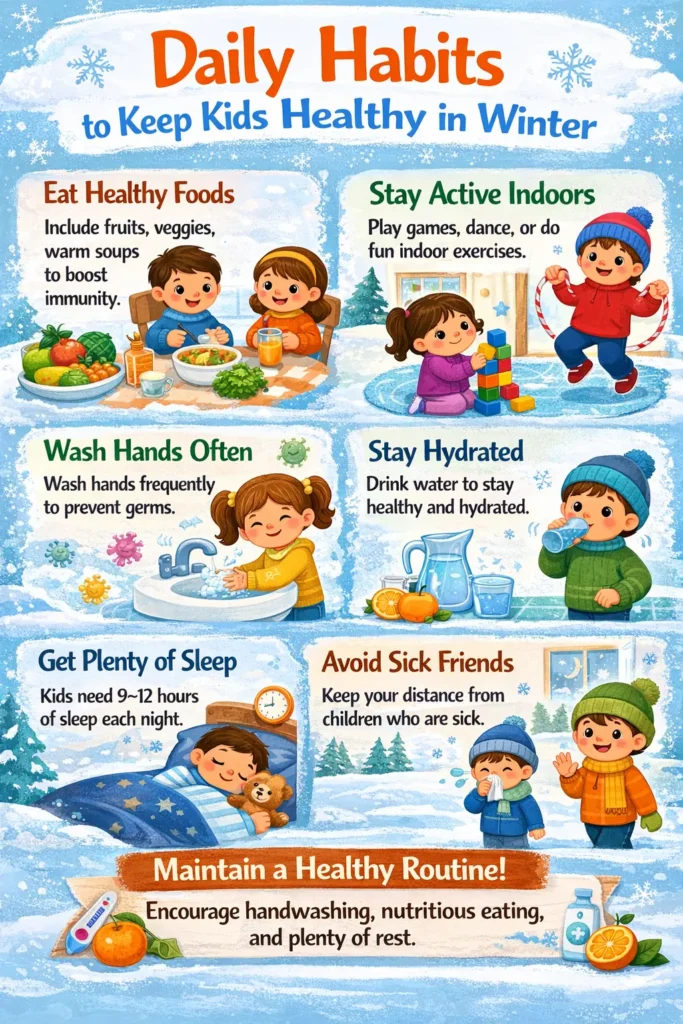
Maintaining a consistent daily routine helps support children’s health during colder months. A balanced diet rich in vitamins and nutrients strengthens the immune system, while proper sleep allows the body to recover and function effectively. Indoor air quality should also be considered, as heating systems can reduce humidity levels and cause discomfort. Using a humidifier or ensuring proper ventilation can improve indoor conditions. These small, consistent habits form the foundation of long-term well-being.
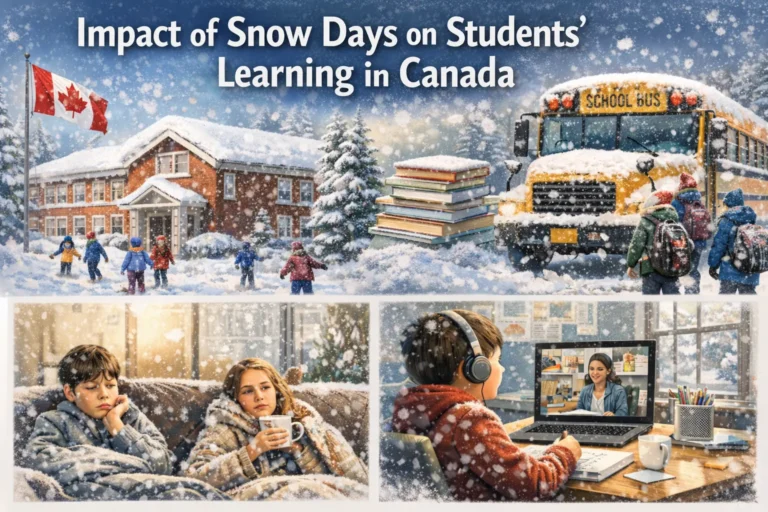
Winter routines can also be affected by closures, which is explained in how snow days affect students learning.
Common Mistakes Parents Should Avoid in Winter
Many winter-related health issues arise from simple mistakes that can be easily prevented with greater awareness. Overdressing children may seem protective, but it can lead to sweating and increased discomfort once they are exposed to cold air. Ignoring wind chill is another common oversight, as it significantly affects how cold the weather feels and increases risk. Allowing children to remain in wet clothing for extended periods can also lead to rapid heat loss. Avoiding these mistakes is what turns good intentions into real protection.
For families with children who ride the bus, our guide to school bus safety in snowstorms covers what to check before a winter commute.
Car Seat Safety in Winter
Bulky winter coats and snowsuits don’t belong in car seats. In a crash, the padding compresses and the harness — which felt snug over the coat — goes slack, letting the child slip out. The AAP’s rule: dress your child in thin, snug layers for the seat, buckle the harness properly, then place a blanket or their coat over the harness. Add a hat and mittens for warmth.
Sledding, Skating, and Ice Safety
- Helmets, always — for sledding, skating, skiing, and snowboarding. It’s the single most important sledding safety step.
- Sled feet-first, sitting up and facing forward — never head-first. One or two riders per sled, on a gentle slope with a flat runout, clear of trees, fences, rocks, and roads. Daylight only.
- Skate only on approved ice — community rinks, not ponds or lakes. Never assume natural ice is safe, and treat rivers and streams as never safe.
- Under-16s should not operate snowmobiles (AAP).
Don’t Forget Winter Sun
Snow reflects up to 85% of UV rays — sunburn happens in January too. Apply sunscreen to exposed skin even on cloudy days, and put sunglasses on your kids: children’s eyes are more sensitive to UV, raising the risk of snow blindness.
Vitamin D for Kids in Winter
From roughly October to April, northern sunlight is too weak for skin to make vitamin D. Health Canada and the Canadian Paediatric Society recommend 400 IU daily for infants (800 IU in winter for young infants) and 600 IU daily for children over one year. Fortified milk (about 120 IU per cup) and fatty fish help, but most families need the supplement — ask your pediatrician for your child’s exact dose.
Frostbite First Aid for Parents
If your child’s fingers, toes, ears, or nose turn white or pale gray and go numb after feeling painful:
- Get inside immediately.
- Warm the area slowly — soak in warm (not hot) water for 20–30 minutes, or use warm washcloths for the nose, ears, and lips. Offer a warm drink.
- Don’t rub the skin, and don’t pop blisters.
- If pain or numbness persists, call your pediatrician.
How cold is too cold for kids to play outside?
Keep children inside when the temperature or wind chill drops below minus 27 degrees, and limit outdoor time below minus 15 — exposed skin can freeze in under 30 minutes at minus 15. No thermometer handy? Shivering means come inside now.
How do I keep my child warm in the snow?
Use three layers: a moisture-wicking base (never cotton), an insulating middle, and a windproof, waterproof outer. Mittens beat gloves, cover the head and neck, wear waterproof boots, and change wet mittens and socks immediately — wet fabric steals heat fast.
What should kids wear in freezing weather?
The AAP recommends several thin layers, warm boots, mittens, and a hat — and dress babies and young children in one more layer than an adult wears. Remove drawstrings from hoods, which are a strangulation hazard.
How long can kids safely play outside in the cold?
There is no official fixed limit — when the cold becomes unpleasant, go inside. A practical rule: indoor warm-up breaks every 20 to 30 minutes, and come in immediately at the first shiver.
What are the signs of hypothermia in children?
Shivering, lethargy, clumsiness, and slurred speech. In babies it looks different: bright red, cold skin and very low energy. If you suspect it, call 911, get inside, remove wet clothing, and wrap the child in blankets.
What are the signs of frostbite in kids?
Skin that hurts or burns, then goes numb; turns white or pale gray; blisters may form. Fingers, toes, ears, and noses are hit first. Warm slowly in warm (not hot) water — never rub the skin.
Is it safe for babies to go outside in the cold?
Yes, briefly and well-bundled: one more layer than you wear, everything covered but the face, and short trips. Never leave an infant sleeping in a cold room or car, and never use bulky coats in car seats — thin layers plus a blanket over the harness instead.
Can kids get sunburn in winter?
Yes. Snow reflects up to 85 percent of UV rays. Apply sunscreen to exposed skin even on cloudy days, and use sunglasses — children’s eyes are more sensitive to UV, which raises the risk of snow blindness.
Do kids need vitamin D in winter?
Yes. From about October to April, northern sunlight is too weak for skin to make vitamin D. Health Canada and the Canadian Paediatric Society recommend 400 IU daily for infants (800 in winter for young infants) and 600 IU for children over one. Ask your pediatrician for the right dose.
How can I keep my child from getting sick this winter?
Annual flu shot for all children 6 months and older, ideally before the end of October; 20-second handwashing with soap; coughing into the elbow; staying home when sick; and cleaning high-touch surfaces.
Conclusion
Winter can be both enjoyable and challenging for children, but with the right precautions, it is possible to maintain safety and well-being throughout the season. By focusing on proper clothing, health awareness, safe activities, and consistent routines, parents can ensure that their children remain protected during colder months. Applying these practical steps not only reduces health risks but also allows children to enjoy winter activities with confidence and comfort.