How Much Snow Makes Driving Dangerous
Winter roads can shift from manageable to treacherous in a matter of minutes. One moment you are cruising along just fine, and the next, your tires are struggling to grip the road. A lot of drivers ask the same question when flurries start falling: how much snow makes driving dangerous? The honest answer is that it is not just about the inches piling up outside.
Knowing what to watch for before you pull out of the driveway could be the difference between a safe trip and a scary one.
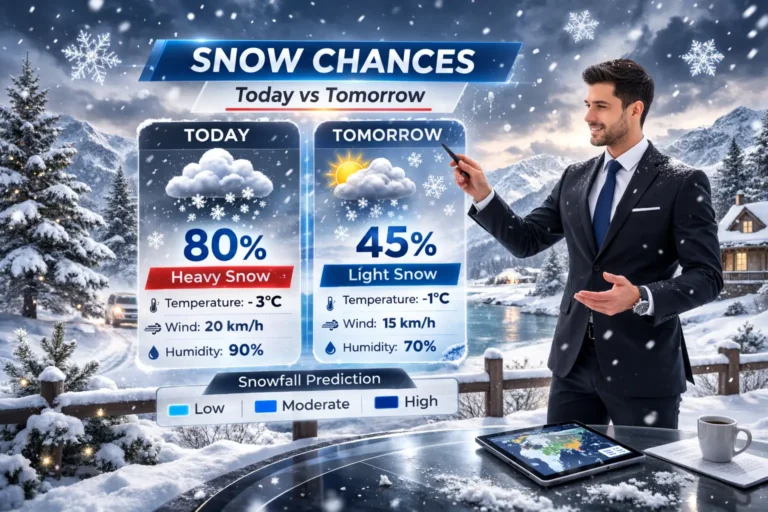
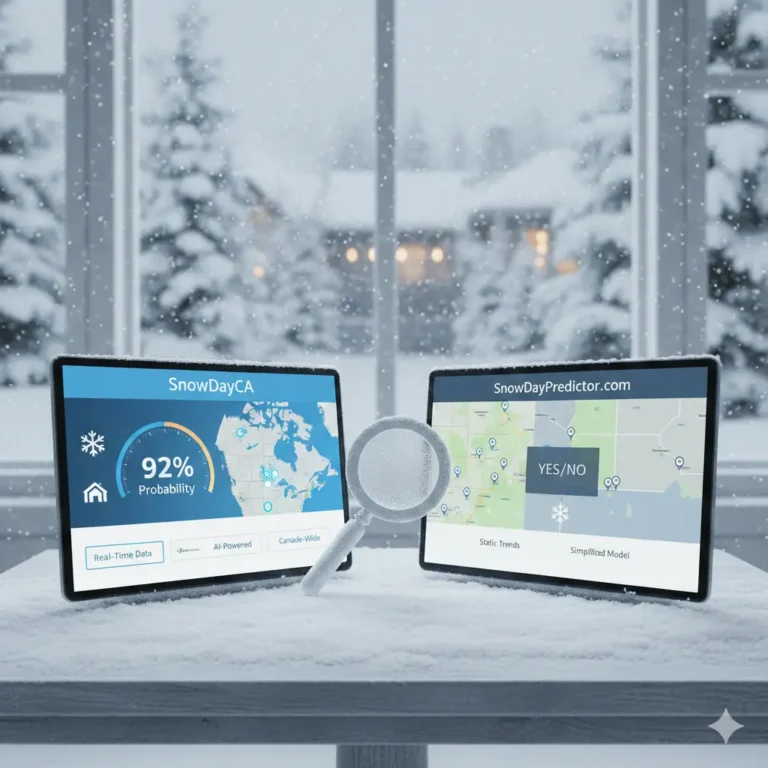
Many drivers also check a snow day predictor before traveling to understand how weather conditions may affect roads and school closures.
When Does Snow Actually Become Dangerous on the Road?
Snow on its own is not always the thing that gets you into trouble. The real problem is what happens to snow once it hits the road. Fresh, fluffy snow actually gives your tires something to grip. But once it gets packed down or starts mixing with ice, that same road becomes a skating rink.
Many drivers brush off light snowfall, especially the first storm of the year. The road looks fine, maybe just a dusting, so they head out without a second thought. But that thin layer sitting on freezing pavement can catch you completely off guard. That is how fender benders happen before people even realize conditions have gotten bad.
How Many Inches of Snow Is Actually Unsafe to Drive In?
There is no magic number that separates safe from unsafe, but there are some real-world patterns worth knowing.
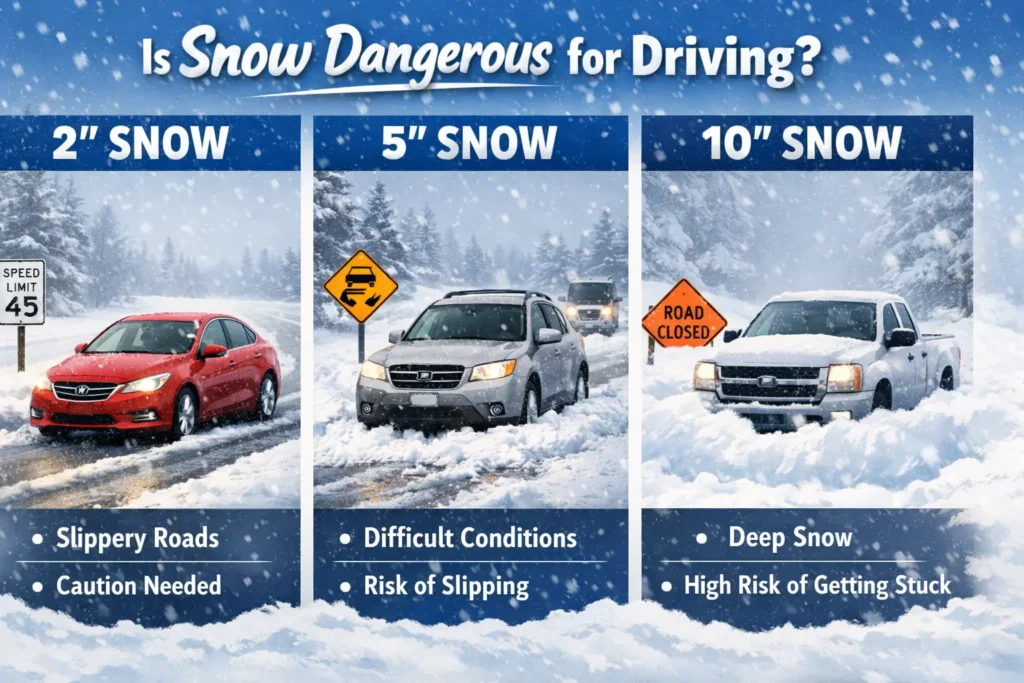
With one to two inches of snow, roads can look almost normal from inside your warm car. Do not let that fool you. They can still be plenty slippery, and you will want to slow down and give yourself extra room to stop.
Once you get to three to five inches, things get noticeably harder. Your vehicle has to work to push through it; braking takes longer, and if the roads have not been plowed yet, you are dealing with conditions that catch many drivers off guard.
Six inches or more is where things get genuinely risky for most drivers. Roads stay buried longer, and if your car is running on all-season or summer tires, you’ll feel that lack of grip very quickly.
Once you are looking at ten inches or more, staying home is the right call for most people. Visibility drops, roads become nearly impassable, and if something goes wrong, emergency crews may take a long time to reach you.
These ranges give you a rough idea of how much snow makes driving dangerous, but the depth of snow is only part of the story. What is underneath it matters just as much.
Why Small Amounts of Snow Can Be More Dangerous Than Heavy Snow
Most people assume the worst storms are the deadliest ones. But that is not always how it plays out. A light snowfall on an unprepared road can cause more crashes than a heavy blizzard that everyone saw coming.
When the first snow of the season hits, the road surface is usually coated in months of built-up oil, grime, and road dust. Snow lands on top of all that, creating a greasy, unpredictable mess. You can be going 20 miles per hour and still find your car sliding sideways.
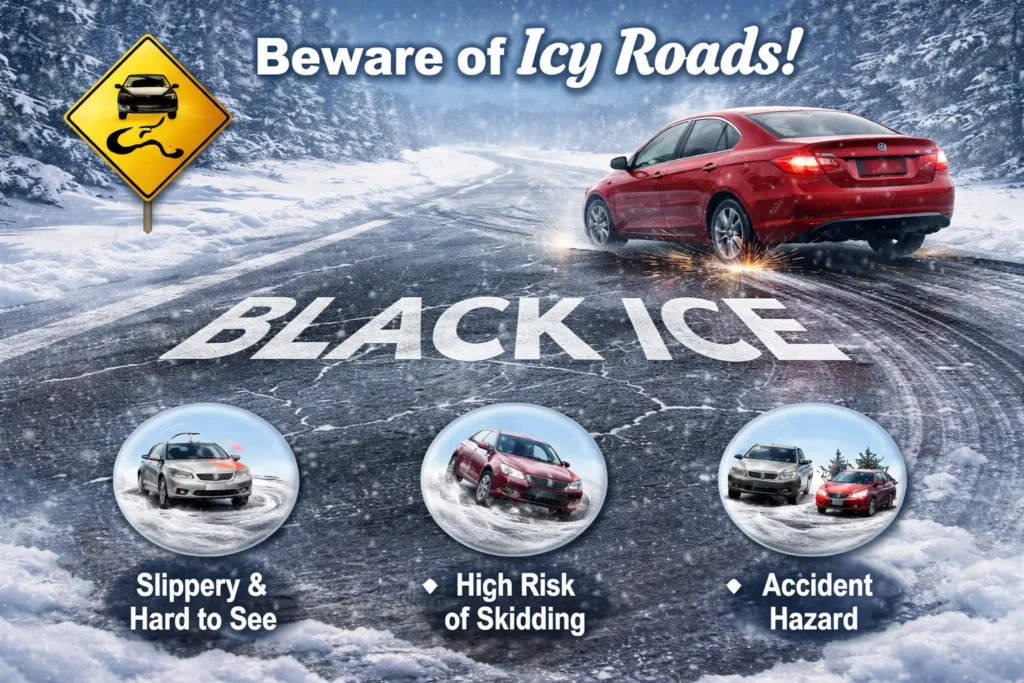
Then there is black ice, which is about as sneaky as it gets. It forms when melted snow refreezes on the road surface and blends into the pavement. You will not see it coming, and by the time you feel it, you are already sliding.
This is why figuring out how much snow makes driving dangerous is not as simple as glancing at a ruler. What the road is doing beneath that snow matters just as much as how deep it is.
Key Factors That Make Snow Driving Risky
Road Conditions and Ice Formation
The road surface underneath the snow often matters more than the depth itself. Packed snow, slush, and ice all eat away at your traction and stretch out your stopping distance.
Temperature and Freezing Levels
When temperatures dip below freezing, snow does not stay snow for long. It hardens into ice, and roads get especially treacherous in the early morning hours and after the sun goes down.
Visibility During Snowstorms
Heavy snow combined with gusting wind can cut your visibility down to almost nothing. Road signs disappear, lane markings vanish, and other vehicles seem to appear out of nowhere.
Vehicle Type and Tire Quality
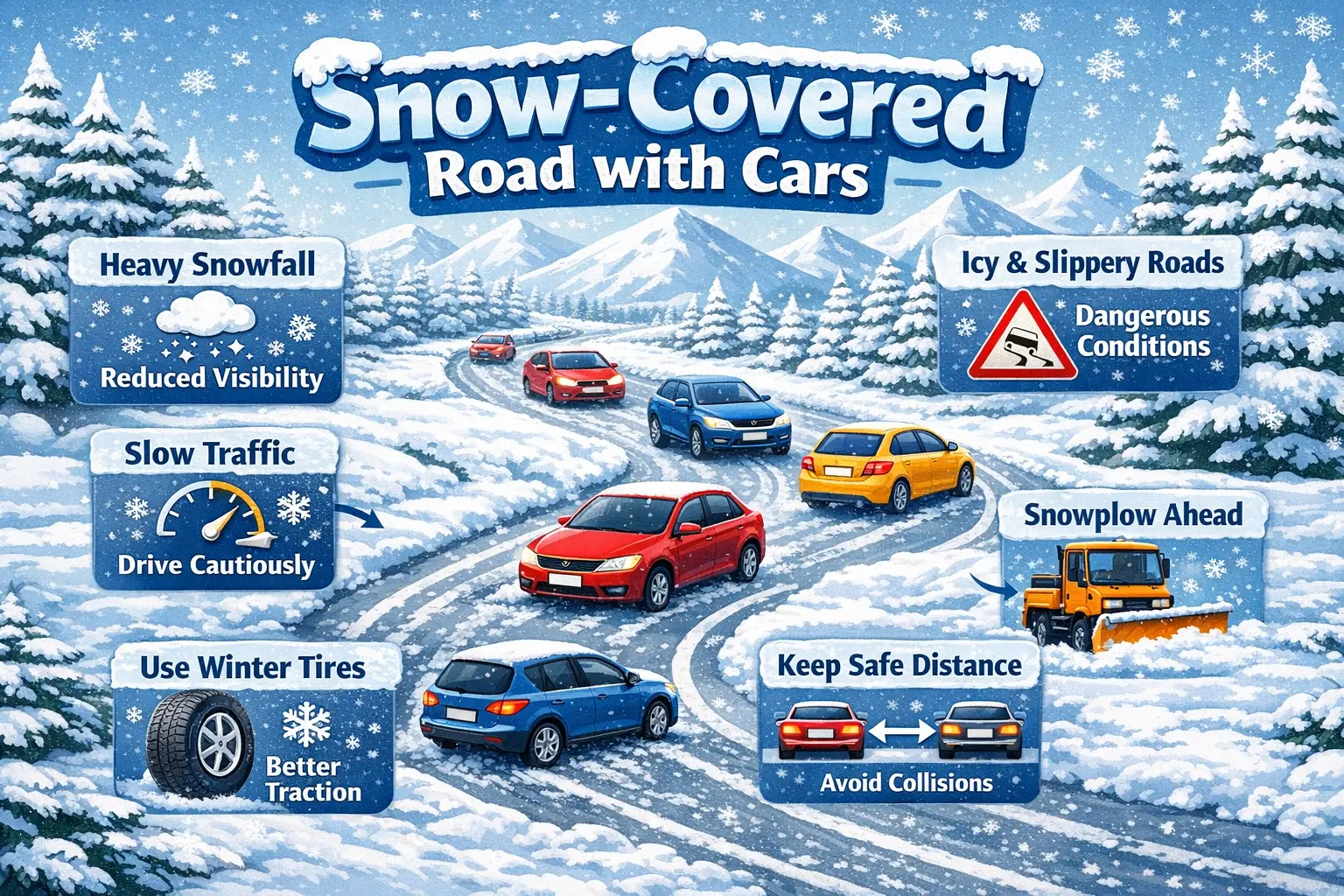
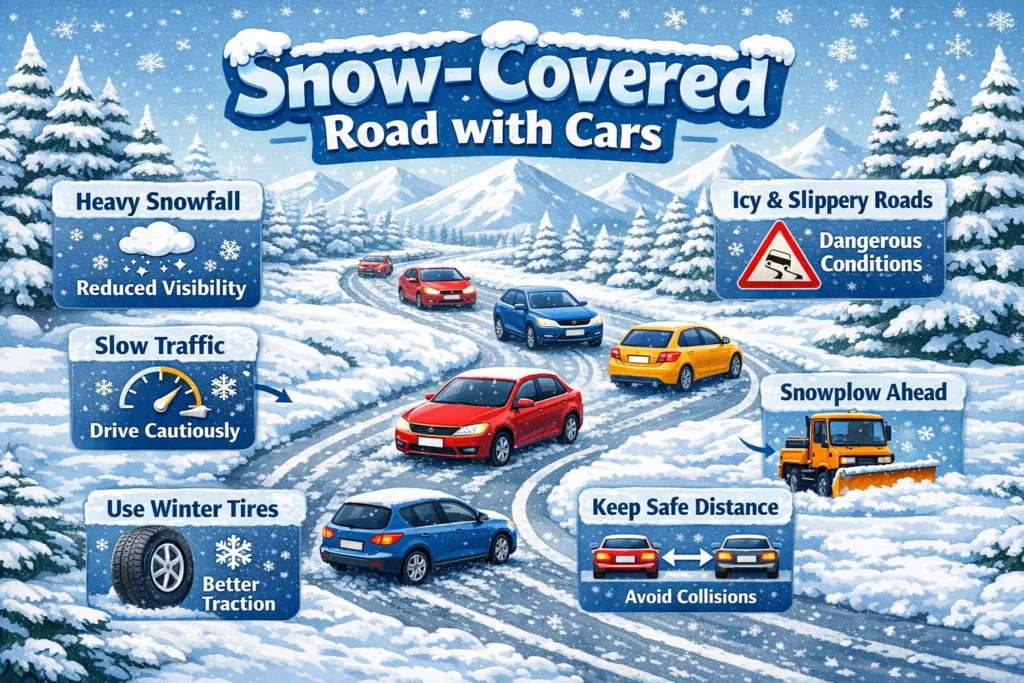
Winter tires make a real difference on snowy roads. They are built to stay flexible in the cold and grip surfaces that would leave standard tires spinning. Worn-out tires in any category are a recipe for trouble.
Traffic and Road Maintenance
High-traffic roads can get packed down and slick from constant use, while back roads and rural routes might not see a plow for hours. The same snowfall can feel very different depending on where you are driving.
How Ice and Slush Increase Driving Danger
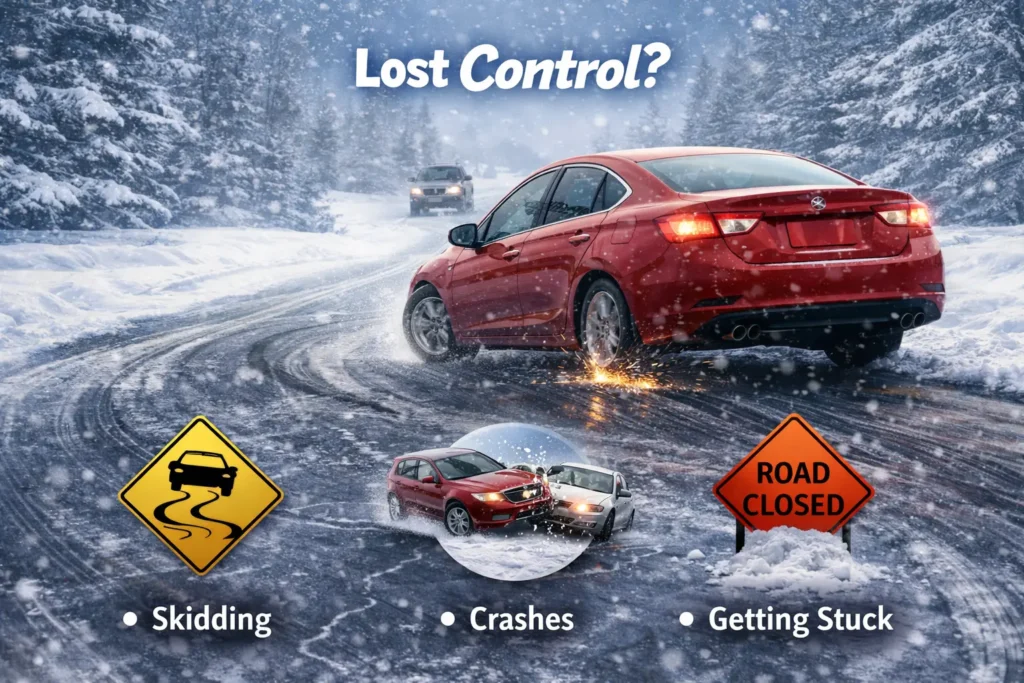
Ice is in a different category from snow when it comes to winter road dangers. Snow at least gives your tires something to bite into. Ice takes that away almost entirely. Even the most careful driver can struggle to brake or steer on a glazed road.
Slush is its own kind of problem. It builds up in wheel tracks and can pull your car one way when you are trying to go another. When your tires start floating on top of it instead of cutting through, steering becomes a guessing game.
Both conditions stretch out your stopping distance well beyond what you are used to, which is one of the biggest real-world factors in how much snow makes driving dangerous.
Safe Driving Practices in Snowy Conditions
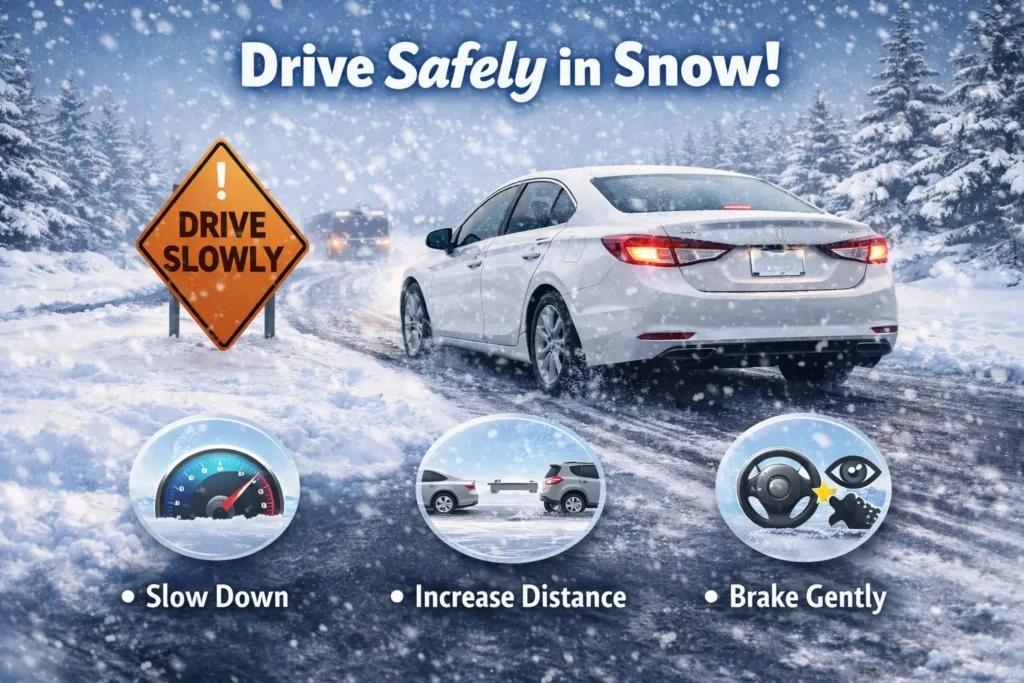
Driving in snow is really about patience. The urge to keep up with traffic or make up time is exactly what gets people into trouble. Slow down more than you think you need to, and leave a bigger gap between you and the car ahead.
Everything you do behind the wheel should feel deliberate and smooth. Jerky steering and hard acceleration are how skids start. Keep your headlights on so other drivers can spot you through the snow, and never assume they can see you clearly.
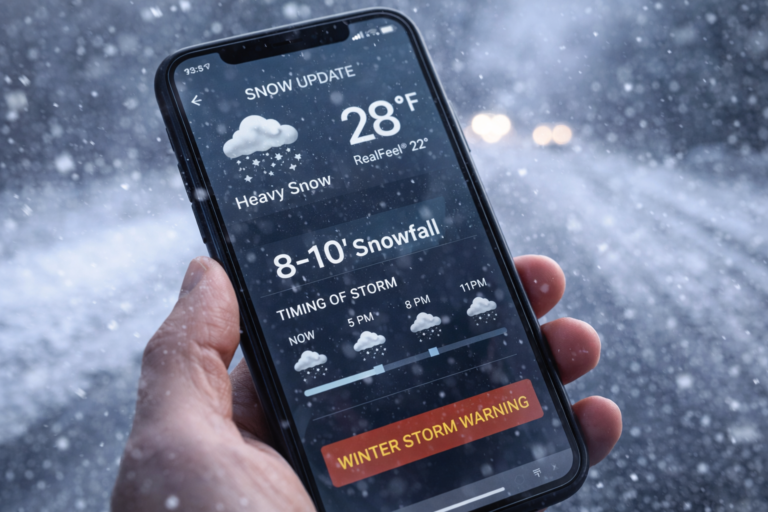
Before you head out, take a few minutes to check the forecast and any road condition reports for your route. A little preparation goes a long way when the weather is working against you.
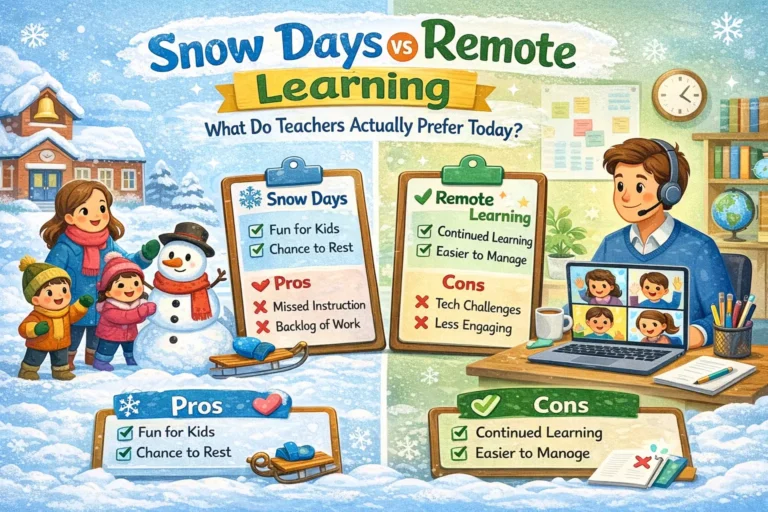
In many regions, schools are closed when snowfall reaches dangerous levels. You can track this using a school closure prediction tool.
When You Should Avoid Driving Completely
Sometimes the right move is not to get in the car at all. When heavy snow teams up with strong winds, you can end up in a whiteout where visibility drops to almost zero within seconds.
Freezing rain might be even worse than snow in some ways. It lays down a thin, clear coat of ice over everything, and the road looks completely normal until you try to stop or turn. Seasoned drivers get caught out by it, too.
If local authorities are telling people to stay off the roads, take that seriously. No errand or appointment is worth the risk. Knowing how much snow makes driving dangerous is really about knowing when your driveway is the safest place to be.
How Winter Conditions Affect Different Roads
Not all roads behave the same in winter weather. Highways tend to get plowed and treated faster, but the higher speeds mean that when something goes wrong, it goes wrong fast.
City streets get churned into slush by constant traffic, while country roads can sit buried under snow for hours waiting for a plow. The same two inches of snowfall can feel completely different depending on where you are.
Frequently Asked Questions
Is 2 inches of snow dangerous for driving?
Two inches might not sound like much, but if there is ice underneath, that road is going to be slippery. Your braking distance goes up, and your margin for error goes down.
Can you drive safely in light snow?
Yes, but you need to treat it with respect. Slower speeds, gentle inputs on the wheel and brakes, and extra attention to the road surface will keep you out of most trouble.
Why is black ice more dangerous than snow?
Because you cannot see it. Snow at least announces itself. Black ice blends into the road, giving you no warning before your tires lose all grip.
How fast should you drive in snow?
Cut your speed well below the posted limit and keep adjusting it based on how the road feels, not what the sign says.
What is the safest way to stop on snowy roads?
The safest way is to brake slowly and steadily while maintaining control of the steering wheel to avoid skidding.
Conclusion
Winter driving safety depends on more than just snowfall levels. While deeper snow increases risk, even light snowfall can be dangerous under the right conditions. Factors such as ice, temperature, visibility, and road maintenance all affect road safety.
Knowing how much snow makes driving dangerous gives you the awareness to make smarter calls before you ever turn the key. Sometimes that means slowing down and adjusting your route. Sometimes it means staying put and waiting for conditions to improve. Either way, a little common sense goes further than any four-wheel drive ever will.
For better planning, always check your local Canada snow day predictor before heading out in winter weather.